
The MAXION platform
Discover learns the work. Agentix runs it.
In Discover, MAX learns how the work runs from your records and your people. In Agentix, specialist agents run it in your systems, on MAXION’s domain knowledge graphs. One of our senior judgement engineers makes the calls in both.
Discover
MAX reads the records, then asks your people
Describe the outcome, and MAX plans the investigation. What it learns becomes the design your agents will run.
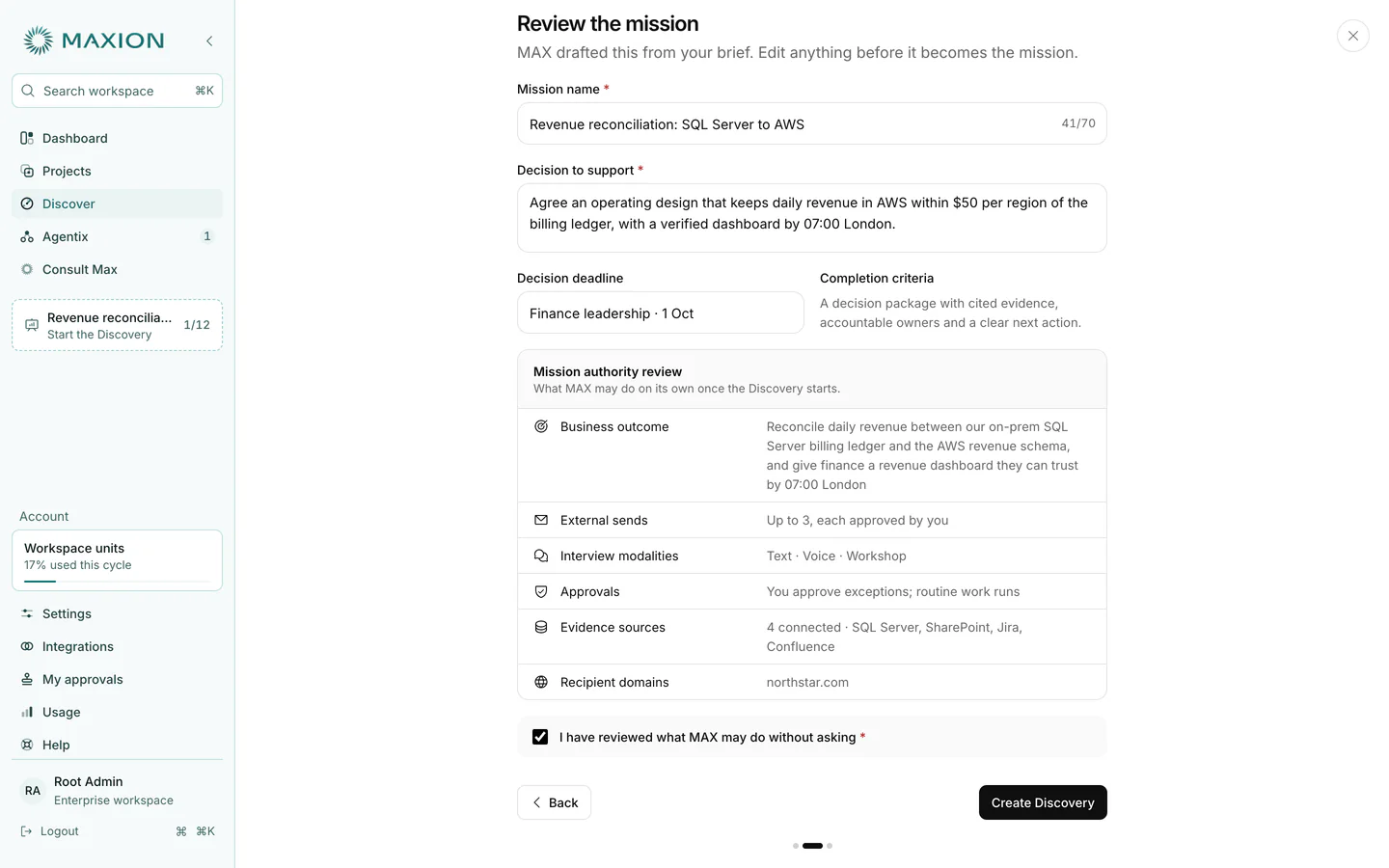
You describe the outcome. MAX drafts the mission and what it may do on its own; you approve it, and MAX binds the sources it may read before asking its first question.
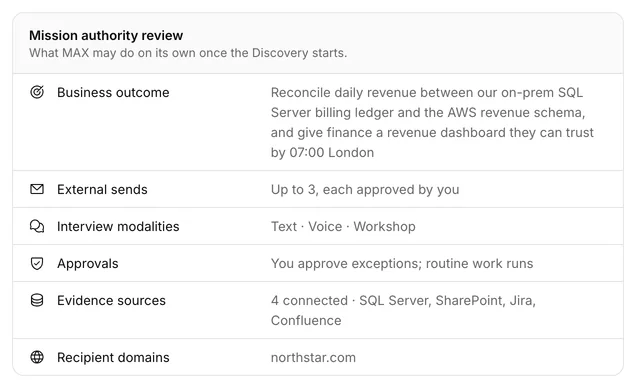
MAX drafts the mission from your brief: the decision it supports, the deadline, what counts as done and what it may do on its own. You approve its authority before it starts.
It binds only the sources you permit and reads them before it asks anyone a question.
MAX interviews the owner first, then the people who do the work, by text, voice or workshop. Each answer becomes cited evidence, and what nobody knows stays an open question.
MAX turns the evidence into the design. A MAXION senior judgement engineer checks the calls, and you approve it.
The approved design goes to Agentix as one packet that can’t be changed, and opens there as a proposal for you to activate.
Agentix
Agents run the work on what Discover learned
Each engagement gets its own team of specialist agents. They work from the approved design and MAXION’s domain knowledge graphs, built from our proprietary data, within the authority you set.
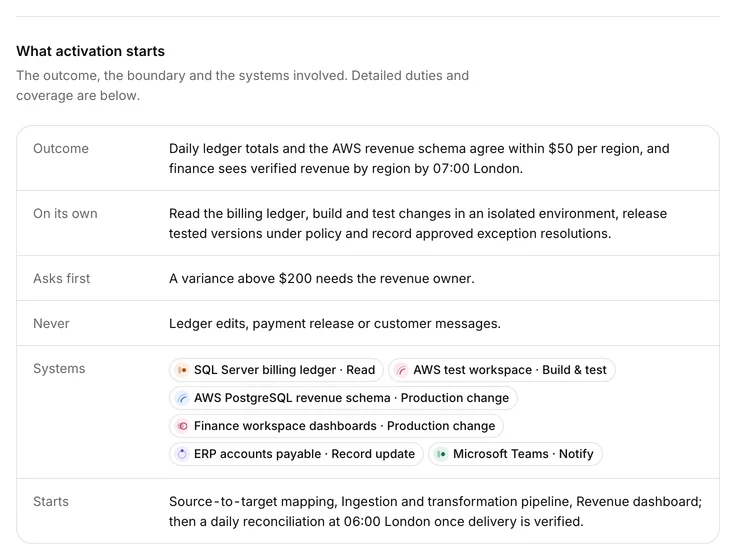
The proposal sets out what the agents do on their own, what they ask first and what they never do. You answer the questions only you can, a read-only check passes, and you activate.
Every engagement starts as a proposal
The outcome, the agents’ limits and every system they’ll touch, in one place you can review before anything runs.
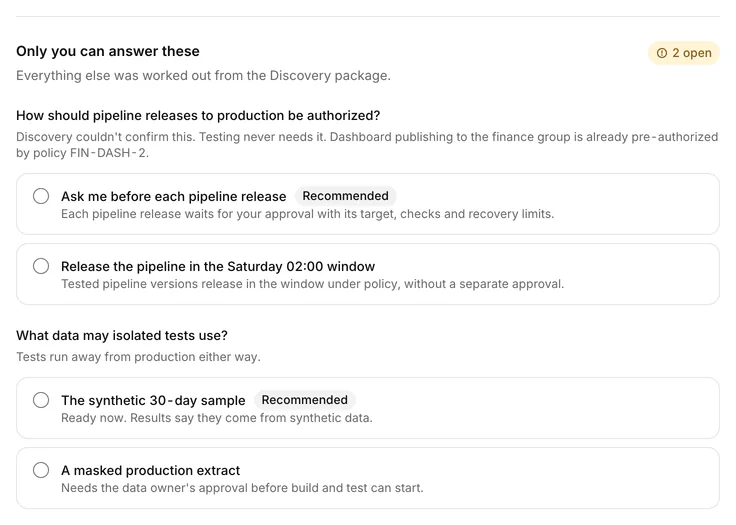
Only you can answer these
Discovery settles what the evidence can. The few questions only an owner can answer come to you, each with a recommended option.
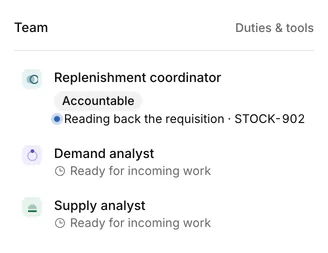
A team for each engagement
One accountable coordinator and the specialists the work needs, each with its own permissions.
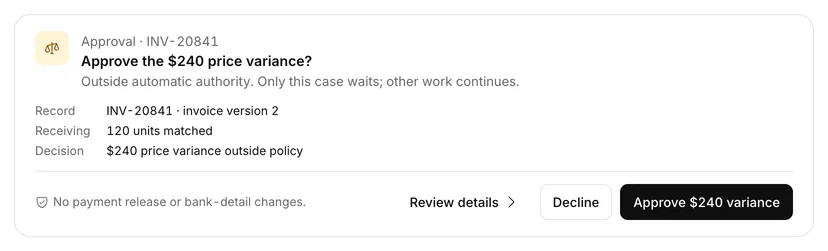
An exception waits for its owner
A case outside the agents’ authority waits for its owner, with the evidence attached. Every other case carries on.
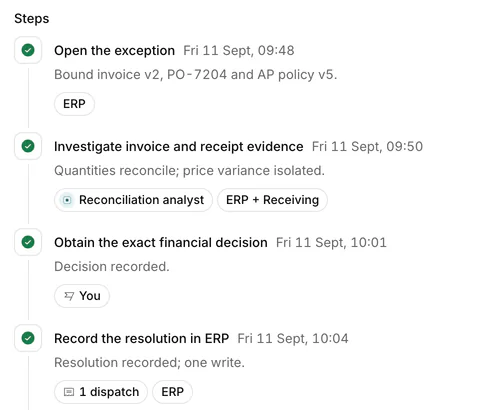
Every step on the record
What was done, by which agent, in which system, and what the evidence showed, read back from the system of record before it counts.
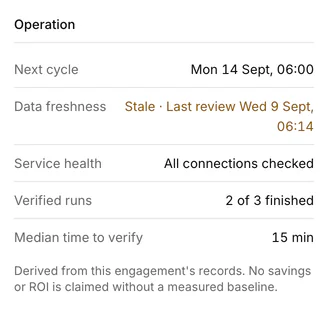
Measured from its own records
Verified runs and time to verify come from the engagement’s own records. No savings are claimed without a measured baseline.
Control
You decide what runs on its own
Authority is set before work starts, and it’s visible while it runs.
- You approve MAX’s authorityMAX proposes what it may do alone in each Discovery, and nothing starts until you approve it.
- Engagements start as draftsNothing runs until its owner activates it.
- Some things are never automaticEach engagement names what its agents may never do, such as release a payment.
- Decisions stay with their ownersMAX can recommend, but the call belongs to the person who owns the decision.
- Every action is recordedWho did what, in which system, with the evidence behind it.
- Your data stays in your tenantEach customer’s data is isolated, and you decide what MAXION can access.
Compare
How MAXION compares
Claude, Codex and general-purpose agents help your people work faster. MAXION delivers the outcome.
| Claude or Codex | General-purpose agents | MAXION | |
|---|---|---|---|
| What you get | An assistant for each person | Automations you build | An outcome, delivered |
| Who does the work | Your people | Your team | Our agents and experts |
| Learns your work from | What you tell it | What you configure | Your records and your people |
| Proof it worked | You check the output | Run logs | Checked against your records |
| How you pay | Per seat or usage | Per seat, run or usage | Per verified outcome |
Questions
Something else? Write to [email protected].
We’ve bought Claude or Codex. How is MAXION different?
Claude and Codex are general-purpose: they help each of your people write, code and analyse faster, and your people run the process and check the results. MAXION is accountable for an outcome: it learns how your work runs, its agents run it in your systems within the authority you approve, a MAXION senior judgement engineer makes the calls, and each result is checked against your system of record before it counts. You pay per verified outcome, not per seat. Keep the assistants your people use, and give MAXION the work you need done.
How is the outcome defined?
Before work starts, you and the senior judgement engineer we assign agree three things: the result, how it will be measured, and the baseline it’s measured against. Everything MAXION does is checked against that measure.
Who owns access and data?
You do. You decide what MAXION can access and approve what the agents may do. Your data is isolated in its own tenant, and every action is recorded.
What does a first project look like?
Usually one stream of work with a clear result, such as reconciling revenue between two systems or triaging service desk incidents. You name the outcome, Discover learns how the work runs today, and Agentix runs it under your rules.
Can we work with you as a founding partner?
Yes. Founding partners work directly with the people building MAXION, help decide what Discover and Agentix do next, and agree founding terms for their first projects.
What should MAXION get done first?
Choose one stream of work with a result you can measure.
What happens next
Tell us the outcomeThe result you need and how you’ll know it’s done. A person replies within one business day.
We agree how it’s measuredWith one of our senior judgement engineers: the measure, and the baseline it’s checked against.
MAX starts the DiscoveryAgents then run the design you approve, and you’re billed when the outcome is verified.